
A IUCN lançou a primeira versão da Lista Vermelha dos Ecossistemas, um ranking dos habitats ao redor do mundo.
A classificação foi modelada com base na Lista Vermelha de Espécies Ameaçadas da IUCN, que agora serve como padrão global para avaliar o risco de extinção de plantas e animais. Assim como o sistema de ranking das espécies, a lista ecossistêmica visa identificar se um ecossistema está vulnerável, ameaçado ou criticamente ameaçado. A lista se aplica a ecossistemas terrestres, de água doce, e marinhos, tendo o potencial de ajudar os governos a priorizar esforços de conservação, explicou David Keith, principal autor do estudo publicado no PLoS ONE que determina os critérios para a iniciativa.
“Sabendo quais ecossistemas estão se saindo bem e quais estão com problemas, os governos, industriais e comunidades locais estarão melhor posicionados para tomar decisões de investimento mais inteligentes para a gestão ambiental sustentável”, disse Keith.
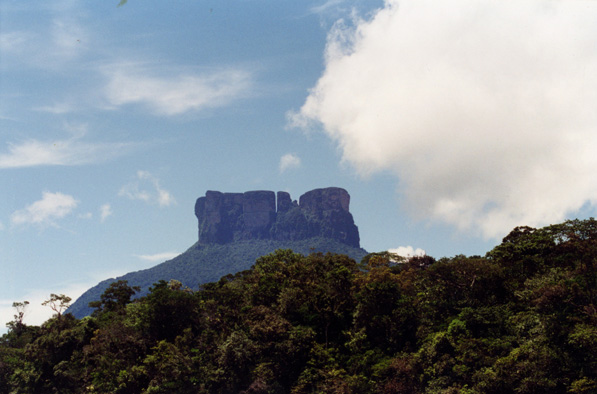
Venezuela’s unusual tepui ecosystem was assessed in the study
O critério para a lista inclui quatro “sintomas” de risco para os ecossistemas: a. taxa de declínio na distribuição do ecossistema; b. distribuição restrita com declínio contínuo ou ameaças; c. taxa de degradação ambiental (abiótica); e d. taxa de distúrbio de processos bióticos. Um quinto critério é o risco de colapso do ecossistema.
O artigo inclui uma reunião de 20 estudos de caso. Entre os ecossistemas mais ameaçados está o Mar de Aral na Ásia Central, que tem sofrido uma redução severa da sua superfície e salinização, levando à extinção de espécies nativas e invasão de exóticas.
Amostra dos ecossistemas
| Aral Sea | Uzbekistan and Kazakhstan | freshwater | critically endangered | |||
| Raised bogs | Germany | freshwater | critically endangered | |||
| Gonakier forests of the Senegal River floodplain | Senegal | freshwater | critically endangered | |||
| Cape Sand Flats Fynbos | South Africa | terrestrial | critically endangered | |||
| Coorong lagoons | Australia | freshwater/marine | critically endangered | |||
| Karst rising springs | Southern Australia | freshwater | critically endangered | |||
| Coastal sandstone upland swamps | Australia | freshwater | endangered/critically endangered | |||
| Swamps, marshes and lakes in the Murray-Darling Basin | Australia | freshwater | endangered/critically endangered | |||
| Giant kelp forests | Alaska | marine | endangered/critically endangered | |||
| Caribbean coral reefs | Caribbean | marine | endangered/critically endangered | |||
| Seagrass meadows | Southern Australia | marine | endangered-critically endangered | |||
| German tamarisk pioneer vegetation | Europe | freshwater | endangered | |||
| Coolibah-Black Box woodland | Australia | freshwater/terrestrial | endangered | |||
| Tapia forest | Madagascar | terrestrial | endangered | |||
| Semi-evergreen vine thicket | Australia | terrestrial | endangered | |||
| Great Lakes Alvars | United States and Canada | terrestrial | vulnerable/endangered | |||
| Reed beds | Europe | freshwater | vulnerable | |||
| Floodplain ecosystem of river red gum and black box | Southeastern Australia | freshwater | vulnerable | |||
| Tepui shrubland | Venezuela | terrestrial | least concern | |||
| Granite gravel fields and sand plains | New Zealand | terrestrial | least concern |
Citação: Keith DA, Rodríguez JP, Rodríguez-Clark KM, Nicholson E, Aapala K, et al. (2013) Scientific Foundations for an IUCN Red List of Ecosystems. PLoS ONE 8(5): e62111. doi:10.1371/journal.pone.0062111